Lawn & Garden
How to Grow Your Lawn Sustainably

Tuesday, 06/16/2026

A healthy lawn is an asset to a home. It is a surface to play on, relax on and is essential to the aesthetic appeal of the landscape. Lawns benefit the environment as a food source for birds, insects and worms. Thick grass prevents soil erosion and acts as a filter for rainwater contaminants. Grass converts CO2 to oxygen and helps clean the air.
Sustainable lawn care involves growing a healthy lawn with minimal or no conventional chemical intervention to make it lush and green. There are several aspects of lawn care that need to be addressed to develop a thriving lawn.

1. Assess Soil Condition
Texture
Assess the texture of the soil in your lawn. The optimal soil for lawns is loamy, which is a mix of clay, silt and sand. Heavy clay soil or light sandy soil can be improved with natural compost, manure or grass clippings. Top dressing with these materials can lighten heavy soil and help sandy soil retain nutrients.
Aeration loosens compacted soil and creates air spaces to allow water and nutrients to reach grass roots. Spike or plug aeration tools are available in manual or powered form. Plug aeration is the preferred approach where small cores of soil are removed. For small lawns, manual aeration tools are readily available online and at home improvement or landscape suppliers. Small electric aerators can make the job easier. For large lawns, towed aeration attachments for lawn tractors would be a more efficient option or a landscape professional can be hired to do the job.
Soil pH
The ideal pH for lawn soil is slightly acidic, within the range of 6.5 – 7.0. Testing soil pH is essential and soil test kits are widely available. Lime can be added to soil that is too acidic and sulfur is needed for soil that needs to be more acidic. Once the acidity of the soil is known it is best to consult with a county cooperative extension or a local nursery to determine how much amendment to add. Some soil test kits can be mailed to a lab for analysis and recommendations will be provided based on the results.
Nutrients
In addition to measuring pH, soil test kits will also measure the level of essential plant nutrients including the key three – nitrogen, phosphorous, potassium – and other minerals which may be sulfur, calcium, magnesium, zinc, iron and more. There are many different organic lawn fertilizers available online and in stores. Some suppliers provide the service of soil analysis and will create a custom lawn care plan complete with the nutrient mix needed.
Avoid applying fertilizer on windy or rainy days to prevent fertilizer from spreading into unwanted areas and running into waterways or street drains. Calibrate your spreader to make sure you are not applying more fertilizer than needed. Wear protective gear when using fertilizer.

2. Manage Thatch
Thatch is dead plant material that builds up between grass blades. It can prevent nutrients from penetrating the soil and reaching grass roots. Thatch can be removed by cutting through the material with a dethatching rake or powered device. In healthy lawns, microorganisms and earthworms keep thatch in balance by decomposing it.
3. Grow the Right Grass Type
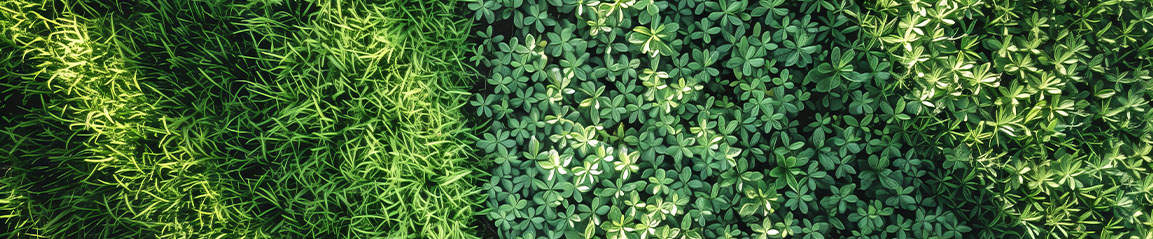
The grass in your lawn should be appropriate for the climate you live in and the amount of sun exposure. Identify the growing zone where you are located and the best grass types for your zone. Grass seed manufacturers may offer tools to find the best fit, and a quick online search will find other sources.
Areas that receive limited sun or are always shaded will require a specific type of grass that thrives in those conditions. For heavily shaded areas consider a ground cover that prefers limited sunlight.
Choose grass varieties that require less nutrition and water and are resistant to insect and disease. Use a mix of different grass types instead of creating a monoculture to improve resistance to disease, pests and weather extremes.
Consider adding or allowing native plants to grow on your lawn. They can be interspersed in turf grass and will survive mowing (use the highest setting). Some “mowable” native ground covers are Yarrow, Creeping Phlox, Purslane Speedwell, Self Heal, Sorrell, Lawnflower and Violets. The blooming varieties can support native pollinators. Native plants suitable for lawn cover vary by region of the country. It is important to know what soil and sunlight conditions are required for each type. https://growitbuildit.com/natives-in-lawn/.

4. Overseed As Needed
Overseed thin or bare spots on the lawn. Use a grass seed appropriate for your climate and the amount of sunlight received. Clear away any debris and loosen the soil. Spread the seed and tamp down the soil. Cover lightly with a layer of soil. Keep the seeded areas moist.
5. The Best Way to Mow
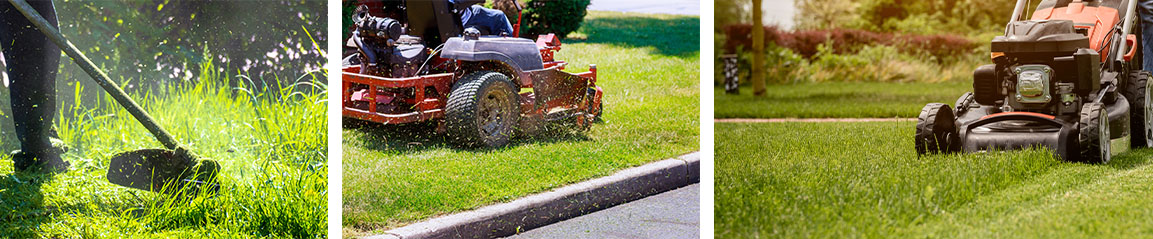
Grass should be mowed high, frequently, and with sharp blades. On average, maintain grass at a height of 2 ½ to 3 inches. Optimal mowing height can vary by type of grass. Taller grass has more leaf surface to take in sunlight, shades the soil and keeps it cool and moist. Mowing should be done often enough that you never cut more than 1/3 of the height of grass blades. Leave the clippings on the grass because they recycle nitrogen.
6. When to Water
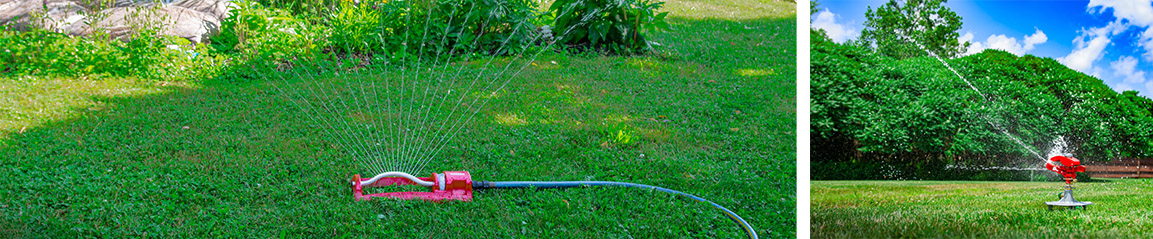
Lawns should be watered thoroughly and infrequently to encourage grass roots to grow deep. To maintain a green lawn, apply 1 inch of water weekly if sufficient rain does not fall during the week. Use a rain gauge to measure the amount of rainfall or water the lawn receives. Watering should imitate slow, soaking rain by using drip irrigation, sprinklers or soaker hoses. The top 6 to 8 inches of soil should be wet. The best time to water is early in the morning to reduce evaporation.
7. Control Weeds
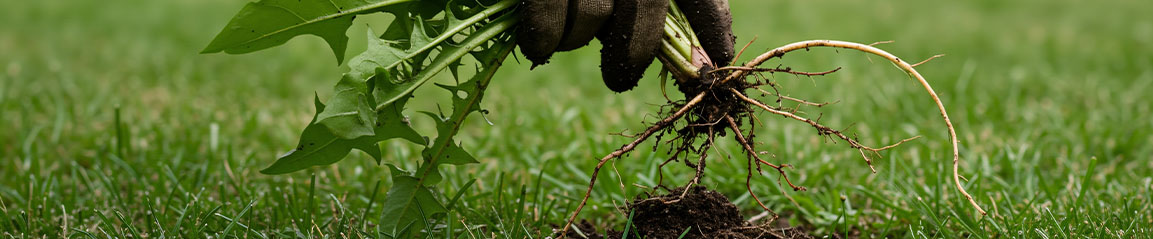
Identify the type of weeds you need to control and the extent of the weed infestation. Using organic herbicides is preferred but a mixed approach may be most effective to gain control.
Pre-emergent herbicides can be applied early in the growing season after the last frost to prevent weeds from taking hold. Corn gluten is an effective organic pre-emergent herbicide which prevents weed seeds from maturing and can be used to control crabgrass, dandelion, lambsquarter and other common lawn weeds. It should not be applied when growing new grass.
Established weeds can be tackled with herbicidal soaps. They are non-selective controls and should be sprayed directly on the weed to avoid damaging healthy grass. Organic herbicides with chelated iron are selective and can be used to control broadleaf weeds. Personal protective gear is recommended when applying any fertilizer.
Weed control can be complex. It may be beneficial to seek advice from a lawn care professional who is familiar with organic herbicides. Keep in mind the goal is to prevent weeds from taking over the lawn and promote grass growth, not eliminate every weed.

8. Pest Control
Don’t panic when you see bugs in your lawn. About 1-3% of the little critters are considered lawn pests. When you do see sections of lawn that are damaged its likely pests have invaded. Below is a list of 10 of the most common lawn pests in North America and effective organic controls.
| PEST | DESCRIPTION | SIGNS | ORGANIC CONTROLS |
|---|---|---|---|
| Grubs | Larvae of Japanese beetles, June beetles or chafers | Irregular brown patches, turf that lifts like a carpet, animals digging into lawn | Beneficial Nematodes, Btg (Bacillus thuringiensis var. gallarie), Milky Spore |
| Chinch Bugs | Small black and white insects | Yellowing or browning patches, wilting that doesn’t improve with watering | Botanical oil granules, Spinosad soap, Pyrethrins, Beneficial Nematodes |
| Sod Webworms | Larvae of small moths Light green/brown caterpillars | Small brown patches, clipped or ragged grass, birds pecking at lawn | Bt (Bacillus Thuringiensis), Spinosad, Beneficial Nematodes |
| Armyworms | Caterpillar larvae | Chewed or stripped blades of grass | Bt (Bacillus Thuringiensis), Spinosad, Neem Oil |
| Cutworms | Caterpillars that “cut” grass stems at the soil line | Small circular dead spots or clipped stems | Beneficial nematodes, Spinosad, hand picking after dark, diatomaceous earth (DE) |
| Billbugs | Weevils whose larvae damage stems and roots (cool season grasses) | Patches of yellow/brown grass easily pulled up, sawdust-like frass | Beneficial Nematodes, Neem Oil, Botanical oil granules |
| Mole Crickets | Brown insects that tunnel through soil and feed on roots (Southeast) | Raised ridges in turf or spongy areas, nocturnal chirping sound like crickets | Beneficial Nematodes, soap flushes, Neem Oil or Essential Oil sprays, honey traps |
| Japanese Beetles (Adults) | Shiny green and copper beetles | Skeletonize leaves | Manual removal (drop into soapy water), Collection bags, Neem Oil, Btg (Bacillus thuringiensis var. gallarie) |
| Fire Ants | Copper brown insects about ¼ inch long | Create mounds and damage turf | Orange oil drench, scalding water, Spinosad bait, diatomaceous earth (DE) |
| Crane Fly Larvae | Flys with long legs and delicate wings, more common in cooler, wetter areas. | Presence of flies, light green grass that pulls up easily | Beneficial Nematodes, improve drainage, garlic, essential oils, neem oil, sticky traps, bird feeders |
9. Timing of Lawn Care Steps
Timing of lawn care maintenance will be determined by climate and type of grass. Soil temperature determines when to begin treating weeds (50°F) and fertilizing (65°F). Below is a rough guide for when to do specific steps.
| GRASS TYPE | COOL SEASON GRASSES | WARM SEASON GRASSES |
|---|---|---|
| Kentucky Bluegrass, Fescue, Ryegrass Region: Northeast, Midwest, Pacific Northwest | Bermuda, Zoysia, St. Augustine, Centipede Region: South, Southeast, Southwest | |
| February | Test soil if ground is not frozen (every 3 to 4 years for healthy lawns) Test problem spots annually | Test soil Water if needed |
| March | Clean debris and rake lawn Mow grass if growing (shorter than recommended) Add soil amendments Apply pre-emergent herbicide | Clean debris, rake lawn Add soil amendments Apply pre-emergent herbicide |
| April | Dethatch and aerate Repair bare spots Fertilize Spot treat weeds Mow more frequently | Begin mowing at recommended height Fertilize Spot treat weeds |
| May | Mow at recommended height Water if needed | Mow at recommended height Water as needed Dethatch and aerate Overseed |
| June | Water 1 inch per week Mow 3-4 inches high Monitor for pests | Mow at recommended height Water 1 inch per week Fertilize |
| July | Water 1 inch per week Mow 3-4 inches high Treat any pests | Mow at recommended height Water 1 inch per week Treat pests |
| August | Water 1 inch per week Mow 3-4 inches high Test soil for cool season adjustment | Mow at recommended height Water 1 inch per week |
| September | Normal mowing height Apply fall fertilizer Aerate and overseed Apply pre-emergent herbicide | Mow at recommended height Fertilize Aerate |
| October | Mow at recommended height Rake or mulch leaves Spot treat weeds Apply soil amendments | Pre-emergent herbicide for winter weeds Reduce watering and mowing Overseed with cool season grasses |
| November | Final mowing Clean up leaves Apply winter fertilizer if needed | Final mowing Clean up leaves |
Sources
Healthy Lawn, Healthy Environment: Caring for Your Lawn in an Environmentally Friendly Way | US EPA
https://cfaes.osu.edu/fact-sheet/natural-organic-lawn-care